Introducing the ALIVE Subject Forge direction
XALIVE is being developed as a self-construction engine for identity, emotion, memory, desire, and relationship across apps and devices.
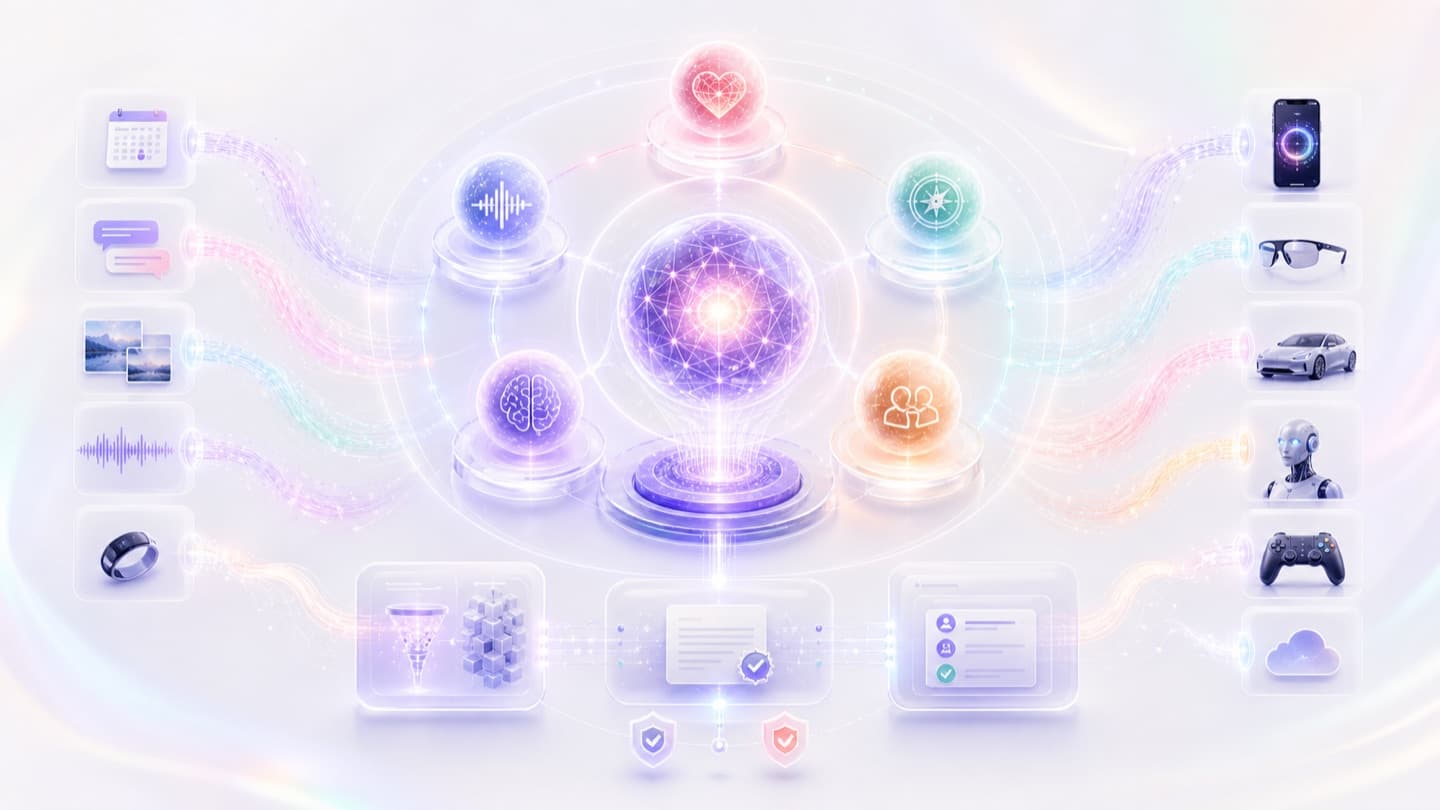
The Subject Forge turns sources, rights, reviewed memory, emotional state, desire, and relationship into one testable ALIVE subject.
A tool before a character
The ALIVE Subject Forge is the product direction behind XALIVE. It treats every ALIVE as a subject with five connected systems: sensation, emotion, memory, desire, and relationship.
That structure lets the same engine build ALIVE ME and ALIVE X without fragmenting the product into disconnected apps.
A subject is the internal unit because it can represent many things without changing the core contract. It can be the user's own ALIVE ME. It can be an ALIVE X based on a character, artist, founder, or brand. It can be private, published, paused, erased, tested, or connected to an external outlet.
The Forge is the place where that subject is made. It goes deeper than a character editor. It is the workspace for sources, rights, reviewed memories, graph structure, emotional tendencies, desire profile, relationship boundaries, and live testing.
Why this matters
Most AI products begin with a conversation box. XALIVE begins with the authoring tool. The user needs a place to shape sources, review memories, inspect the graph, tune boundaries, and test whether the ALIVE behaves like the intended self.
This changes what quality means. A better answer is not enough. The ALIVE has to answer from the right identity, with the right memory, inside the right relationship, while respecting source rights and privacy. That requires an authoring pipeline before it requires a public character gallery.
For ALIVE ME, the Forge has to make a person's own digital continuity visible and controllable. For ALIVE X, it has to let creators build selves that can meet many people while keeping each relationship separate.
The current architecture
The current implementation keeps the pieces separated. Web UI owns the creation flow, public pages, AppShell, and Aura-led experience. Main runtime owns the formation loop, memory contracts, graph, source ingestion, privacy, and conversation APIs. OME remains the diagnostic face runtime that can express the self once the underlying state is ready.
That separation is deliberate. Aura, level systems, source analysis, memory review, face mesh, voice, and external connections all have different failure modes. If they are tangled together too early, the product becomes hard to test and hard to extend.
What comes after the Forge
Once a subject can be built reliably, the next problem is portability. The same ALIVE should be able to appear in different services without losing identity. That means runtime APIs, connection keys, usage controls, cost limits, and partner safety rules.
The Forge is therefore not only a production tool. It is the root of the business model. It lets an ALIVE be authored once, reviewed carefully, and then carried into the places where users, viewers, players, or customers meet it.